
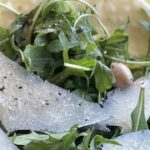
Arugula Pecorino Salad
Pecorino cheese is part of the landscape of Italy Pecorino comes from pecora, the Italian word for sheep, and refers to any cheese made from sheep’s milk. It is produced in Lazio, Sardinia and Tuscany. The story of pecorino in Tuscany reaches back to the time of the Etruscans, who were already raising sheep and producing cheese long before the rise of Rome. Sheep thrived in the rugged hills and open pastures of central Italy, where cattle were less practical. You can’t drive but a few miles without seeing a flock of sheep grazing in the Tuscan hills.While you may consider pecorino as a single cheese, it comes in many varieties, textures, and flavors. · Pecorino fresco is a young cheese aged for about 20 to 45 days. It is pale, soft to semi-soft, and milky, with a gentle tang. It is eaten with fresh fruit or a drizzle of olive oil. This is the pecorino of spring, traditionally enjoyed with young fava beans, olive oil, and crusty bread.· Pecorino stagionato is aged for at least 120 days and often much longer, during which time it develops a firmer texture and a deeper, more complex flavor. Notes of toasted nuts, herbs, and caramel emerge, and the cheese becomes suitable for grating or shaving over soups, risotto, and pasta. · Pecorino comes in countless variations such as washed in wine, rubbed with olive oil, coated in ashes, or infused with peppercorns or herbs. Each style reflects local practices and individual creativity. · Pecorino Toscano Stagionato DOP represents the highest level of cheesemaking. DOP or Denominazione di Origine Protetta (Protected Designation of Origin) guarantees that a cheese is produced in a specific region using traditional methods and local ingredients. For Tuscan pecorino DOP, this means milk from sheep raised in designated areas of Tuscany, along with strict standards governing production and aging. The result is a cheese that expresses territorio, the true place of origin, in each bite.The process of making pecorino follows ancient tradition. Fresh sheep’s milk is gently warmed and coagulated with rennet. The curds are cut, drained, and placed into molds, where they are pressed and shaped. After salting, the cheeses are aged in carefully controlled environments, where time, temperature, and humidity transform the curds into flavorful cheese.
Servings: 2
Ingredients
- 3 cups fresh arugula
- extra virgin olive oil
- salt and freshly ground black pepper
- aged balsamic vinegar
- shave pecorino, as needed
- cooked chick peas, as needed
Instructions
- Trim the stems from the arugula, if necessary. Place it on a large salad bowl.
- Drizzle olive oil over the arugula. Season with salt and pepper, then toss the greens.
- Drizzle the greens with the vinegar. Toss and adjust the seasoning with more salt and pepper.
- Mound the salad onto two serving plates.
- Scatter the shaved pecorino and chick peas over the greens.